
Forma Radiante: The Radiant Form of Expression and Meaning
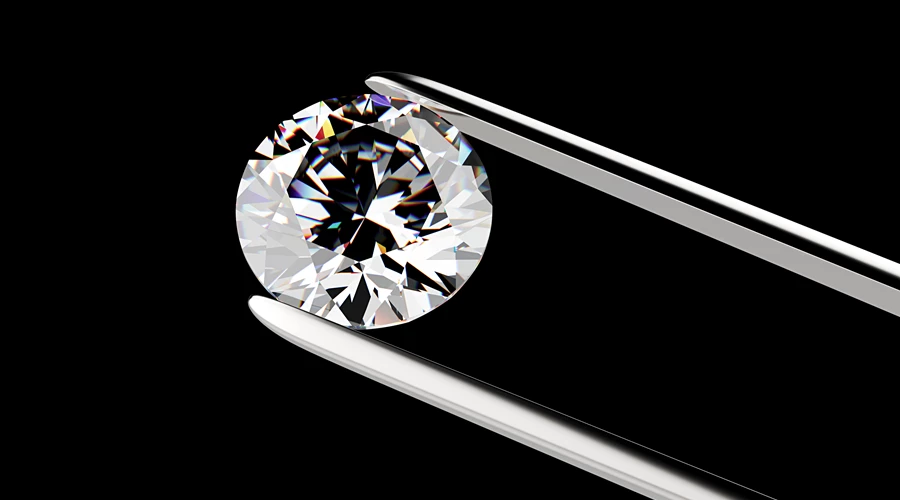
In an age where language and symbolism are deeply intertwined with visual experience, the term “Forma Radiante”—Spanish and Italian for “Radiant Form”—resonates with a poetic, even transcendent implication. More than just a linguistic construct, Forma Radiante evokes the intersection of light, form, and expression. It suggests the possibility of an aesthetic that goes beyond the merely visual, encompassing the emotional, spiritual, and intellectual planes.
But what exactly is Forma Radiante? Depending on the context—art, design, spirituality, or even metaphysics—the phrase can take on distinct yet overlapping meanings. This article explores Forma Radiante as a concept that bridges disciplines, touching on design theory, philosophy, architecture, and even esoteric thought.
Etymology and Literal Meaning
The phrase itself is a blend of two Romance language roots:
- Forma: From Latin, meaning shape, structure, or appearance.
- Radiante: From Latin radiāre, meaning to shine or emit rays.
Put together, Forma Radiante translates as “Radiant Form”—a shape or structure that emits energy, beauty, or meaning, often metaphorically represented by light. This immediately conjures images of geometric elegance bathed in light, spiritual icons surrounded by halos, or futuristic designs glowing with energy.
Forma Radiante in Art and Aesthetics
In the realm of visual art, Forma Radiante could be understood as a form that transcends its own boundaries—through light, color, or energy. Think of the works of artists like James Turrell, who uses light itself as a sculptural medium, or Wassily Kandinsky, whose abstract forms seem to radiate emotional frequency.
The concept is also closely related to how light has been used symbolically in religious art for centuries. Halos around saints, radiant mandalas, or even the divine light in Byzantine icons all exemplify the idea of forms that are more than material—they radiate meaning, divinity, or emotion.
In modern and postmodern art, the “radiant form” can also refer to expressions that break through traditional limitations—artworks that glow not literally, but conceptually. A bold political piece, an innovative installation, or a revolutionary design could all be described as having a forma radiante if they shine metaphorically, influencing and inspiring.
In Architecture and Design
In architecture, Forma Radiante may describe structures designed to interact with light in innovative ways. Renowned architect Louis Kahn once described light as “the giver of all presence,” which aligns closely with this idea. A building with a radiant form isn’t necessarily just illuminated—it’s shaped by light, enhanced by it, and designed to reflect it back to the observer in meaningful ways.
Examples include:
- The Church of Light by Tadao Ando, where a cross-shaped cutout allows light to enter in a sacred and symbolic gesture.
- The Sagrada Família by Antoni Gaudí, whose surfaces and forms dance with sunlight in a kaleidoscope of meaning.
In industrial or product design, Forma Radiante might describe objects that combine function and form in a way that feels ‘alive’—almost glowing with purpose or beauty. The sleek curves of a Tesla, the iconic design of an iPhone, or a minimal lamp that uses LEDs to cast ambient light all carry elements of radiant form.
Philosophical and Esoteric Dimensions
Moving beyond the physical, Forma Radiante takes on even deeper philosophical significance. In Platonic thought, forms are ideal, abstract entities—perfect versions of the things we experience in the real world. A “radiant form” in this context might be one that is closest to the ideal, glowing with perfection and truth.
In mystical traditions—such as Hermeticism, Kabbalah, or Eastern mysticism—the concept of radiance is often linked to enlightenment, divine energy, or inner realization. Here, Forma Radiante can be understood as the outer manifestation of an inner light. A spiritually enlightened being, an awakened mind, or a sacred object may all take on this “radiant form” in symbolic or even literal depictions.
Carl Jung’s idea of the archetype might also relate here. A radiant form could be an archetype—a primordial image that resonates across cultures and time, radiating symbolic energy.
The Digital Age: Forma Radiante in Virtual Spaces
With the advent of digital design, augmented reality, and virtual worlds, Forma Radiante has entered new territory. In digital art and gaming, radiant forms are everywhere—from glowing weapons to ethereal avatars. These virtual constructs often embody idealized versions of beauty, power, or mysticism, enhanced by real-time lighting engines and shaders that simulate radiance in pixels.
Think of the glowing grid of Tron, the ethereal terrain of Journey, or the digital mysticism of Cyberpunk 2077. In all these cases, the radiant form becomes a symbol of the future—a place where light and form are digitally synthesized to create immersive meaning.
A Universal Symbol?
Ultimately, Forma Radiante is a universal metaphor. Whether in a painting, lab made diamonds, a building, a digital space, or a sacred vision, it represents the convergence of form and energy—of structure and soul. It challenges creators to go beyond the superficial, asking:
- Does your work radiate meaning?
- Does it reflect something beyond itself?
- Is it alive with purpose, truth, or beauty?
Conclusion
Forma Radiante is not just a stylistic choice or visual trait—it is a philosophy. It encourages us to create and experience forms that are not inert but vibrant, meaningful, and alive. Whether you’re an artist, designer, thinker, or simply a lover of beauty, seeking or creating radiant forms means engaging with the world at a deeper level.
In a culture flooded with images, the truly radiant form stands out—not just because it is beautiful, but because it shines with intention. It calls to us, moves us, and in some profound way, changes how we see the world.